
A First-Paycheck Budget for Apprentices Living Away From Home
The short answer
Budget from the move-in date through the first actual deposit, then build a separate ordinary-paycheck plan. Verify your starting pay, pay schedule, required purchases and any reimbursement terms. A job's hourly rate does not provide cash before payroll arrives.
Moving for an apprenticeship combines two changes: learning the work and running a household somewhere new. The first budget should expose those timing problems before a security deposit or equipment purchase uses the money needed for meals and transportation.
Ask for the starting facts in writing
Confirm the start date, payroll cutoff, first expected payday, pay frequency and required deductions. Ask how classroom time, travel, tools, uniforms and other program costs are handled under your specific arrangement. Do not assume another apprentice's employer follows the same terms.
Apprenticeship.gov describes registered apprenticeship as combining paid work, learning and progressive wage increases. The actual starting rate, progression and program requirements still need confirmation with the sponsor. Apprenticeship.gov career seekers.
Distinguish a wage increase listed for a future milestone from money available now. Ask what must be completed and when payroll reflects the change.
Build the arrival-to-payday bridge
Here is an original fictional move with $1,800 available:
| Cost before the first deposit | Amount |
|---|---|
| Housing deposit and initial rent | $1,050 |
| Travel to the new location | $180 |
| Food before payday | $180 |
| Local transport | $120 |
| Confirmed required gear paid by the worker | $160 |
| Total | $1,690 |
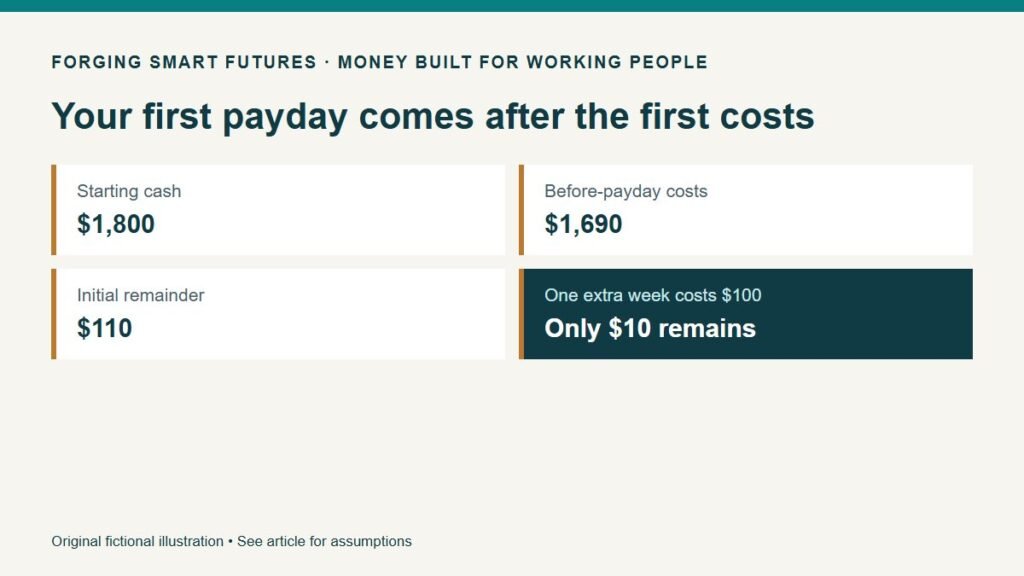
That leaves $110. If the first deposit arrives a week later and food/transport add $100, only $10 remains. The point is not that these are typical prices. It is that one timing assumption can consume the entire remaining margin.
If a reimbursement is expected, record when a claim can be submitted, required evidence and expected processing. Until its timing is established, do not count it as cash for an earlier expense. Keep receipts where they can be found after a long day.
Build the ordinary plan from take-home pay
When the first statement arrives, compare the deposit with your estimate. Set recurring commitments using the pay you can reasonably depend on, not hoped-for overtime or a future progression increase.
List housing, utilities, food, transportation, phone, insurance, debt payments and program costs that actually apply. Include expenses that recur less often, such as travel home or vehicle registration. Shared housing can reduce one expense while creating others, including deposits, utilities and transportation changes.
Use FSF's variable-pay budget guide and bill-calendar method to connect the totals to dates. Being paid every two weeks is not the same as receiving money twice in every calendar month.
Delay commitments until the pattern is real
A new lease, vehicle payment or financed tool purchase can outlast the excitement of the first large check. Before committing, check the lower-hours case and any probationary or program-continuation uncertainty that applies.
For gear, obtain the actual required list and ask what the employer or program provides. Compare buying, borrowing or approved alternatives where appropriate. Never substitute unapproved safety equipment merely to reduce cost; ask the responsible supervisor about compliant options.
Use the first three deposits to refine the plan
After each deposit, record actual pay, essential costs and anything overlooked. Review whether the housing and commute assumptions were realistic. Address a repeated shortage early with the program's support contacts and relevant providers rather than assuming the next check will fix it.
The free Budgeting checklist in FSF Resources provides a starting point. Your first financial milestone is reaching the next payday with the work requirements and household essentials accounted for.
General financial education, not individualized financial, investment, tax, legal or employment advice. All amounts are fictional. Program and employer terms vary; no affiliate relationship is included.
Editorial attribution: Paul Foster
Published: September 10, 2026 Last reviewed: September 10, 2026
Sources & References
- https://www.apprenticeship.gov/career-seekers
Put this into practice
Build a plan that still makes sense when overtime falls. Free Budgeting checklist — no membership required.
Related decisions
- Per Diem and Reimbursements: Keep Work-Travel Money Separate
- How to Budget When Overtime Changes Your Paycheck Every Month
- Paid Every Two Weeks? Build a Bill Calendar That Fits
Expanded member resource: Variable Pay Household Planning Workbook. Guided exercises with local save, reopen and print controls. Worksheet answers are not automatically calculated. Compare free resources and FSF membership benefits.
Human-reviewed, AI-assisted content; how FSF creates articles.