
Build a Cash Plan Before a Seasonal Shutdown
The short answer
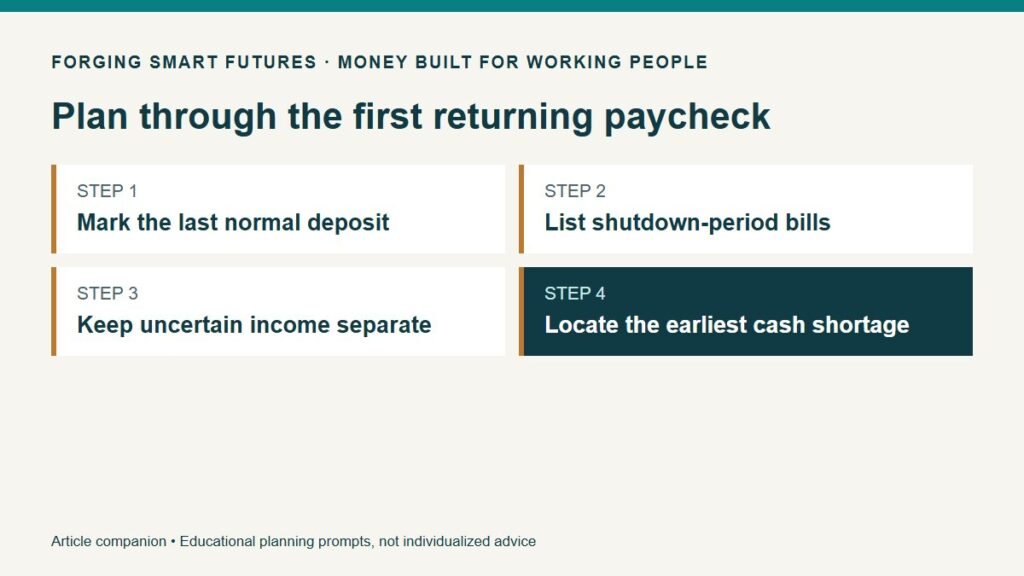
Plan from the last paycheck before the shutdown through the first paycheck after work resumes. List essential payments by date, include the cost of returning to work, and separate confirmed money from benefits or replacement work that have not been approved or paid.
A two-week shutdown can create a longer cash gap if payroll lags behind the return date. Ask about the actual pay schedule rather than treating the first day back as payday.
Draw the full gap on a calendar
Mark four dates: the last scheduled workday, the last regular deposit, the expected return date and the expected first deposit afterward. Confirm what is known and flag what can change. A supervisor's estimate of the restart may be useful, but it is not cash in the account.
Write in household bills, minimum payments and realistic groceries and transport for the entire interval. Some work expenses may fall while you are home; others continue. Do not remove car insurance or a vehicle payment merely because commuting temporarily stops.
The CFPB cash-flow budget tool demonstrates carrying balances between weeks. For a shutdown, extend the calendar until the income actually resumes. FSF's example below is fictional and does not estimate your eligibility for benefits.
A three-week cash gap with a misleading finish
Assume $1,200 is available after the final deposit, with no other confirmed income until the end of week three.
| Period | Cash entering | Necessary cash leaving | Ending cash |
|---|---|---|---|
| Opening balance | $1,200 | — | $1,200 |
| Week 1 | $0 | $450 | $750 |
| Week 2 | $0 | $500 | $250 |
| Week 3, before first returning paycheck | $0 | $400 | −$150 |
| First returning paycheck | $900 | $0 | $750 |
The eventual $750 balance hides a $150 gap before payday. If the paycheck is delayed another week and that week requires $300, the lowest modeled point becomes −$450 before the deposit. Negative values show unmet funding needs, not permission to overdraw.
The lesson is not that everyone needs a particular reserve. It is that the last low point matters more than the balance after pay resumes.
Give uncertain income its own column
You may intend to use unemployment benefits, temporary work, paid leave or a household member's additional hours. Record the amount, expected date, evidence and uncertainty separately. Check eligibility and payment rules through the relevant official program or employer. This article does not establish whether you qualify, when payment starts or how other earnings affect it.
Run a base case using confirmed funds, then an additional scenario using the uncertain money. That makes the dependency visible. Do not let the same hoped-for income silently solve several separate gaps.
Likewise, include costs associated with replacement work: transport, childcare, supplies or a delay before that work pays. A promised job total is not necessarily the cash available during the shutdown.
Act on the earliest gap
If the forecast goes negative, identify the first date and the amount missing. A specific problem is easier to discuss than “money will be tight.” Contact the relevant biller before the due date to ask what options, costs and consequences apply. Get any agreed arrangement in writing and update the forecast only after confirming it.
Do not assume a changed due date eliminates the bill. It may move the problem into the first full-pay month. Show the catch-up payment in that later period so the return to work is not followed by another surprise.
For spending you control, distinguish postponing a purchase from skipping an obligation or necessary care. The calculator cannot make that judgment for you. If the shortfall cannot be closed safely, seek suitable assistance rather than treating increasingly expensive borrowing as an automatic solution.
Reserve something for restarting
The first days back may require fuel, transport, meals or childcare before the first returning paycheck. Include those costs even if you reduced them while at home. If equipment or credentials need attention before return, confirm the expense and responsibility rather than assuming the employer or worker pays.
Keep a short checklist of restart dependencies: schedule confirmed, transport available, essential bills covered until deposit, and any payment arrangements still understood. This prevents the cash plan from ending one step too early.
Update when the schedule changes
Review the calendar whenever the shutdown length, payroll timing or household needs change. Keep the old version so you can see what moved. A forecast is a working document, not proof that the future will follow the first estimate.
Use the FSF Hours-Cut Cash Cushion Calculator for a broad shortfall estimate, then use actual dates for the shutdown plan. The useful result is a date, an amount and a next action before that date arrives.
General education only, not individualized financial, investment, tax, legal or credit advice. Examples are fictional and depend on the stated assumptions. Prepared with AI assistance by FSF Editorial Team; reviewed for publication by the FSF publisher.
Editorial attribution: Paul Foster
Published: September 10, 2026 Last reviewed: September 10, 2026
Sources & References
Put this into practice
Separate true surprises from bills you can see coming. Free Saving checklist — no membership required.
Related decisions
- How Much Emergency Savings Do You Need When Your Hours Can Be Cut?
- How to Budget When Overtime Changes Your Paycheck Every Month
- Save for Annual Insurance Bills Without Depending on a Big Overtime Month
Expanded member resource: Cash Cushion and Planned Expenses Workbook. Guided exercises with local save, reopen and print controls. Worksheet answers are not automatically calculated. Compare free resources and FSF membership benefits.
Human-reviewed, AI-assisted content; how FSF creates articles.