
Budget for the hobby—not the fantasy of owning all the gear
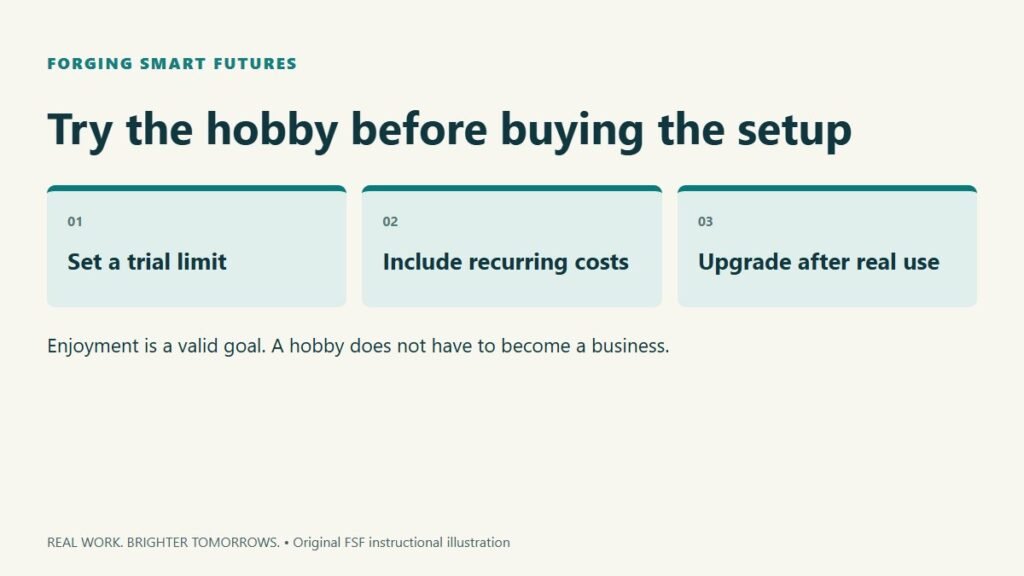
A hobby can be valuable without making money. Dancing, fishing, sewing, gaming, gardening or making things can simply be something you enjoy. The financial question is how to make room for the activity without letting the excitement of starting create bills you regret later.
Budget for a small, real experience first. Add equipment when use—not fear of missing out—shows why you need it.
Price the whole activity
List the entry cost, ongoing supplies, travel, admissions or subscriptions, storage, maintenance and occasional replacements. Then distinguish what you need to participate safely from what makes the setup more elaborate. Borrowing, renting or buying used can be useful for some items, but condition and safety still matter.
A cheap purchase you cannot use is not automatically a bargain. Nor is a membership good value simply because it offers many sessions you cannot attend around shifts.
Set a trial budget with an end date
Fictional example: you choose a six-week trial with a $150 ceiling. Entry or rental costs total $60, travel totals $30 and consumables total $20. That leaves $40 within the limit. A tempting $120 accessory would bring the trial to $230—$80 over the original ceiling.
You can revise a budget deliberately if the household can afford it. The point is to see that you are changing the decision rather than pretending the accessory fits the old one.
Before purchasing, record what you expect to do with the item during the trial. “I will use it on the next three outings” is more informative than “everyone online has one.” If the item mainly supports a future version of the hobby you have not tried, leave it on a later list.
Build a purchase rule while you are calm
Choose a waiting period for nonessential upgrades and a spending threshold that triggers another look at the household plan. These are personal boundaries, not scientifically established rules. A useful question is: what specific frustration will this purchase solve, and have I experienced that frustration repeatedly?
Keep a wishlist instead of a cart. Note price, purpose, existing alternative and the next review date. A sale deadline does not establish a need.
Give recurring enjoyment a yearly home
Season passes, annual subscriptions, trips and equipment replacement belong in the full-year budget. If a $240 renewal is twelve months away and nothing is reserved, $20 monthly would fund that amount under unchanged assumptions. If it is only four months away, the equivalent is $60. Check the actual due date.
The CFPB's savings and cash-flow tools offer ways to organize goal amounts and timing. Your hobby amount should fit your own obligations and priorities. CFPB planning tools
Let yourself stop without buying a rescue
At the end of the trial, ask whether you enjoyed doing the activity, not just researching or shopping for it. You can continue, pause, change the format or stop. Do not assume resale will recover the purchase price; check condition, selling costs and actual offers before counting that money.
If you later want to sell what you make, evaluate it as a separate business decision. Deadlines and customers can change the enjoyment. A hobby does not owe you an income stream.
Use the overtime budget to avoid basing recurring hobby spending on uncertain extra pay, and the rent-or-buy comparison when equipment costs deserve a closer look. The goal is more time enjoying the activity and fewer purchases standing in for it.
Human-reviewed, AI-assisted content; how FSF creates articles.
Editorial attribution: Paul Foster
Published: September 30, 2026 Last reviewed: September 18, 2026