
Higher Hourly Pay or Better Benefits? Compare Two Job Offers
The short answer
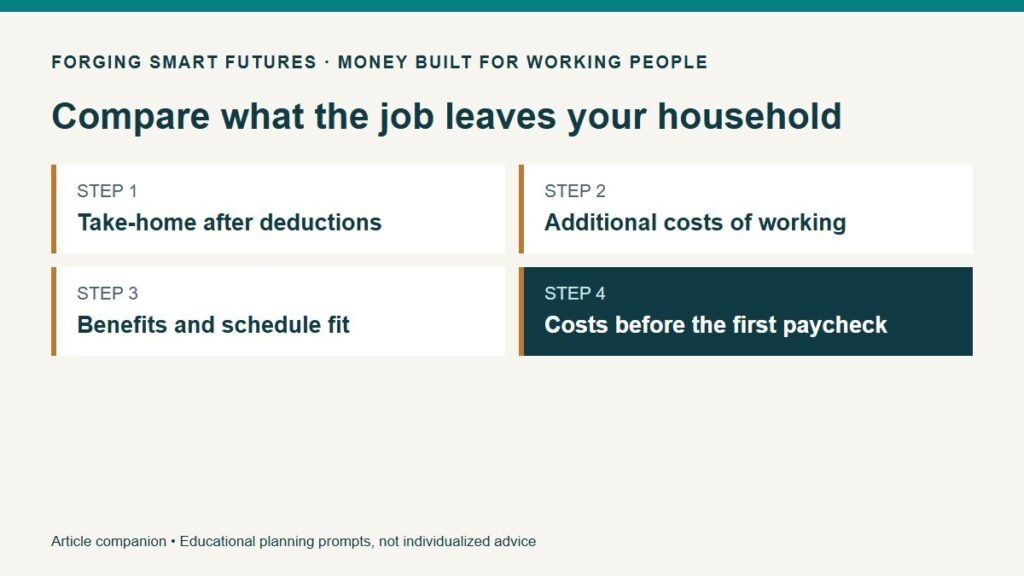
Compare household cash, benefits and time in separate columns. A higher hourly rate can come with different deductions, commuting costs, childcare needs or unpaid gaps. Build a realistic take-home scenario for each offer, then review the written benefit terms before deciding what the difference means for your household.
Do not turn every benefit into an invented cash value. Some benefits protect against risks or provide access you may value differently from another worker.
Ask for enough information to make the comparison
Request the written pay rate, expected schedule, pay frequency and applicable differentials. Keep uncertain overtime and bonuses separate from the baseline. If hours vary, compare a normal lower-hours period as well as a busier one.
Ask for the relevant benefit documents, employee premium amounts, eligibility dates and any conditions that affect participation. The BLS tracks health, retirement and leave benefits as distinct parts of compensation; its national data do not establish what your offer provides. Your employer's written terms are the source for that. BLS Employee Benefits.
For take-home estimates, identify which deductions are already included. Do not subtract a health premium twice because it appears on both your pay worksheet and benefit comparison. This article does not calculate payroll taxes or determine your coverage rights.
A fictional offer with more pay but less usable cash
| Monthly assumption | Job A | Job B |
|---|---|---|
| Estimated take-home after payroll deductions | $3,600 | $3,900 |
| Additional commuting, childcare and other work costs | $300 | $650 |
| Cash after those additional costs | $3,300 | $3,250 |
Job B's larger deposit produces $50 less monthly cash after the listed work costs, or $600 less over twelve identical months. The example assumes the take-home estimates already reflect each job's payroll deductions. All numbers are fictional, not typical wages or benefits costs.
Now add time. If Job A requires 45 weekly hours including commuting and Job B requires 52, annual cash after the listed costs divided by 52 weeks of those hours is about $16.92 versus $14.42 per hour. This is a household comparison, not a legal wage calculation or a complete measure of job value.
The result does not prove Job A is better. Job B may offer training, stability, preferred work or benefits that justify the difference. It tells you the price of those advantages in this scenario.
Keep the benefit comparison readable
Use a separate page with the benefit, each offer's written terms, unanswered questions and importance to your household. For health coverage, identify the employee cost, relevant plan features and whether the services or providers you need fit. For retirement, ask about eligibility, contribution rules and vesting where applicable. For leave, clarify what is offered and when it can be used.
Do not add an employer retirement contribution to money available for next month's groceries. It belongs in the longer-term comparison under the actual plan terms. Similarly, do not treat an advertised maximum bonus as guaranteed household income.
Mark unknown items “not confirmed.” Giving an unknown benefit a zero value can make one offer look artificially weak, while assuming generous terms can make it look artificially strong. Resolve the items that could change your decision before committing.
Test the transition, not just the settled month
Changing jobs can create a gap between deposits, new commuting expenses or a period when benefit arrangements differ. Ask for actual dates and build the first few pay periods separately from a normal future month.
A one-time payment can also carry conditions. Read the written agreement and seek appropriate help if repayment or other obligations are unclear. This comparison does not interpret those clauses.
List cash due before the first check from the new employer. A move that works after three months may still need a transition plan now. Include any costs you would incur even if the new job did not work out as expected.
Tenure matters when it changes something concrete
Find out whether a date affects vested retirement benefits, a bonus, paid leave or repayment obligations. Also consider the skills, references and opportunities you are developing. Time served alone does not prove the job is worth keeping, and leaving just before a meaningful benefit date can carry a cost you should understand.
The Department of Labor notes that job changes can affect retirement and health benefits. Obtain the plan and coverage details rather than assuming benefits follow you unchanged. DOL job-change guidance
Ask questions that reveal the actual job
| Question | Evidence to request |
|---|---|
| Are hours dependable? | Expected schedule and explanation of seasonal variation |
| When do benefits start? | Written eligibility and coverage dates |
| What is the first usable payday? | Payroll calendar and first-period treatment |
| What could I owe if I leave? | Signing, relocation or training repayment terms |
| Does the schedule fit my household? | Shift, overtime, travel and on-call expectations |
An attractive answer in a recruiting conversation should be clarified before it becomes a major household assumption. Keep unresolved items visible.
Compare a disappointing scenario too
What if overtime is unavailable, the commute is longer than expected or the start date moves? What if you stay and hours are reduced? Estimate the effects you can reasonably model without pretending to know the future.
Identify your non-negotiables—perhaps a required care pickup time or a physical restriction—before scoring perks. A job that cannot meet an essential need should not win because it offers several smaller advantages.
Also see the repayment-clause article and career-transition budget. A good decision makes the tradeoffs explicit; it does not require pretending there is a risk-free choice.
Put the decision into one sentence
Try: “Under the lower-hours scenario, this offer changes monthly cash by ___, changes weekly time by ___, and adds these confirmed advantages: ___.” Then list the unresolved terms that could change the conclusion.
This format makes it easier to discuss the choice with your household without reducing it to the headline wage. Keep a copy of the assumptions and written offer. Use the FSF budget planner with the proposed take-home amount and actual costs, and revisit the comparison when real pay statements arrive.
General education only, not individualized financial, investment, tax, legal or credit advice. Examples are fictional and depend on the stated assumptions. Prepared with AI assistance by FSF Editorial Team; reviewed for publication by the FSF publisher.
Editorial attribution: Paul Foster
Published: September 10, 2026 Last reviewed: September 18, 2026
Sources & References
Put this into practice
Compare written pay, time and benefit terms on the same basis. Free Work & Compensation checklist — no membership required.
Related decisions
- What Going to Work Really Costs Your Household
- Is That Certification Worth the Cost? Compare Time, Pay and Opportunity
- Open Enrollment for Shift Workers: A Practical Comparison Checklist
Expanded member resource: Total Compensation Decision Workbook. Guided exercises with local save, reopen and print controls. Worksheet answers are not automatically calculated. Compare free resources and FSF membership benefits.
Human-reviewed, AI-assisted content; how FSF creates articles.