
Starting Over Financially: A First-30-Days Plan for Working Adults
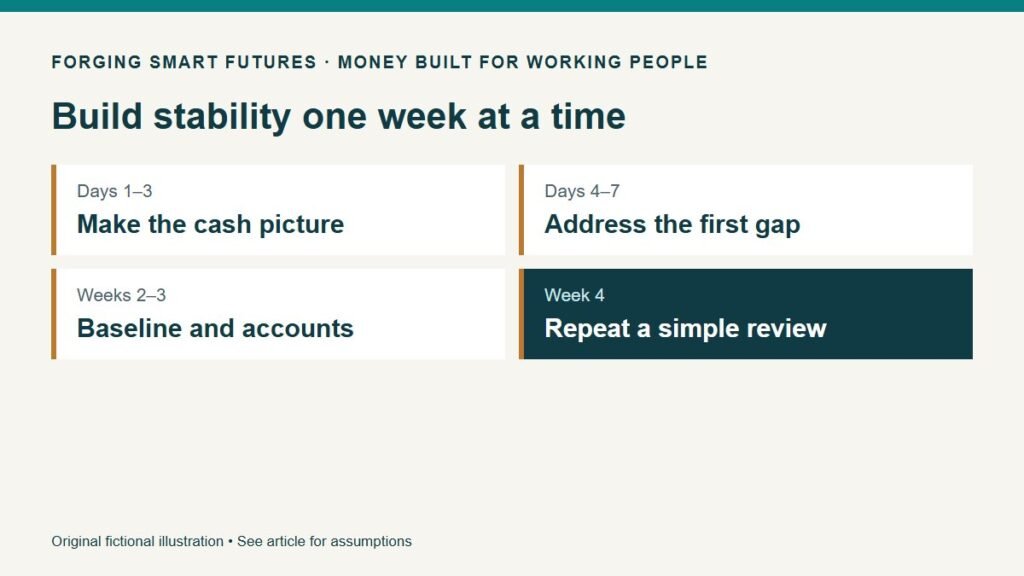
The short answer
Use the first month to make the situation visible and manageable: protect essentials, map cash through the next paydays, contact providers about gaps, gather account records and establish one repeatable review. You do not need to solve retirement, debt and every past decision in the first weekend.
The schedule below is an original organizing framework, not a legal deadline or a guarantee of recovery. Move urgent housing, safety, medical or court matters ahead of the suggested sequence.
Days 1–3: make a small, accurate starting picture
List accessible cash, the next confirmed deposit, bills due before then and everyday costs that cannot wait. Separate available money from credit limits, pending reimbursements and accounts you cannot readily use.
For each obligation, note the consequence of missing it and whom to contact. The CFPB's bill-priority tool emphasizes housing, income, insurance and court-ordered obligations rather than simply paying whoever calls most often. CFPB prioritizing-bills worksheet.
Keep one private folder for statements and notices. On the first page, record only the next five actions, each with a contact and date. A complete archive can wait; an important response deadline cannot.
Days 4–7: address the first cash gap
In a fictional restart, a worker has $450 and expects the next take-home deposit in twelve days. Essential costs before then total $620. The immediate gap is $170. A future monthly budget showing a surplus does not cover an earlier shortage.
Check the dates and amounts, identify anything genuinely deferrable and contact affected providers before promising a payment. Ask about available arrangements, their cost and how they affect later bills. Record the answer, the person contacted and any confirmation number. An unanswered voicemail is not an agreed extension.
For job loss or a major employment change, review official benefits and coverage options. The CFPB job-loss guide is a starting point for contacts; eligibility and terms still require the relevant agency or plan's current information.
Week 2: rebuild a baseline from actual records
Review recent deposits and expenses. Identify what changed: lower hours, a household separation, a new commute, caregiving or a one-time emergency. Separate the ongoing monthly problem from the immediate catch-up amount.
Create a low-pay baseline using the income you can reasonably plan around. Add irregular costs that a statement-only review may miss: annual insurance, registration, work gear or an upcoming deductible. Leave estimates labeled as estimates and set a date to replace them with actual figures.
Use FSF's variable-pay budget guide. Do not build a plan that requires every available extra shift just to meet ordinary obligations without acknowledging that dependence.
Week 3: organize accounts before moving money
List banks, debts, workplace benefits and old retirement accounts. Record verified provider contact information and where the latest statement is stored. Keep passwords and full account numbers out of a broadly shared spreadsheet.
Identify access problems and unanswered questions. Finding an old account does not establish that withdrawing or moving it is the right next step. Check restrictions, taxes, fees and benefits before changing it. This week is about visibility, not a hurried financial overhaul.
For overdue debt, distinguish the original account, a collection contact and a claimed balance. Verify what you are dealing with before sending money or accepting a settlement. Seek qualified help for legal disputes or obligations you do not understand.
Week 4: choose a routine that survives a tiring shift
Schedule a short check near payday: confirm deposits, look ahead at due dates, reserve essentials and update one priority. Put the supporting records in the same place each time. If another adult shares the bills, agree who handles which action.
Measure useful changes: fewer unknown balances, a confirmed payment arrangement, a covered next-payday window or a resolved account login. A single account balance cannot capture all of that progress.
At day thirty, write what is stabilized, what still has a cash gap and what decision needs expert help. Choose the next two actions from that list. The free Starting Over checklist in FSF Resources can hold the plan; expanded member workbooks provide more room for structured exercises.
General financial education, not individualized financial, investment, tax, legal or credit advice. Example is fictional. No affiliate relationship is included.
Editorial attribution: Paul Foster
Published: September 10, 2026 Last reviewed: September 10, 2026
Sources & References
- https://files.consumerfinance.gov/f/documents/cfpb_your-money-your-goals_prioritizing-bills_tool.pdf
- https://www.consumerfinance.gov/consumer-tools/unexpected-job-loss/
Put this into practice
Make the next few weeks manageable before rebuilding the long term. Free Starting Over / Late-Starters checklist — no membership required.
Related decisions
- Your Hours Were Cut: What to Review Before the Next Payday
- Find and Organize Old Accounts Before Making a New Money Plan
- Can You Afford a Career Change Later in Life? Build a Transition Budget
Expanded member resource: Financial Restart Organizer. Guided exercises with local save, reopen and print controls. Worksheet answers are not automatically calculated. Compare free resources and FSF membership benefits.
Human-reviewed, AI-assisted content; how FSF creates articles.