Is your budget short, or is your paycheck late for the bills?
Separate a recurring budget shortfall from a bill arriving before payday, with two fictional examples and a practical decision table.
Plan bills and spending around changing pay, overtime and real payday dates.

Separate a recurring budget shortfall from a bill arriving before payday, with two fictional examples and a practical decision table.

Build a twelve-month cash plan for irregular bills, changing pay and low-balance dates, with a worked example and steps you can use now.
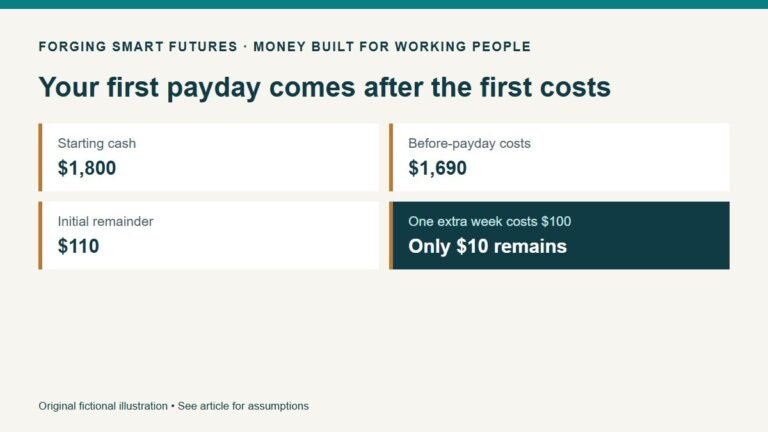
Plan the cash needed before your first apprentice paycheck, including housing deposits, transport, food and verified work costs.

Track travel advances, expenses and repayment timing so a large work-travel deposit does not get mistaken for extra household income.

Compare a budget app and spreadsheet using the same variable-pay test. Check bill timing, upkeep, exports and cost before choosing a system.
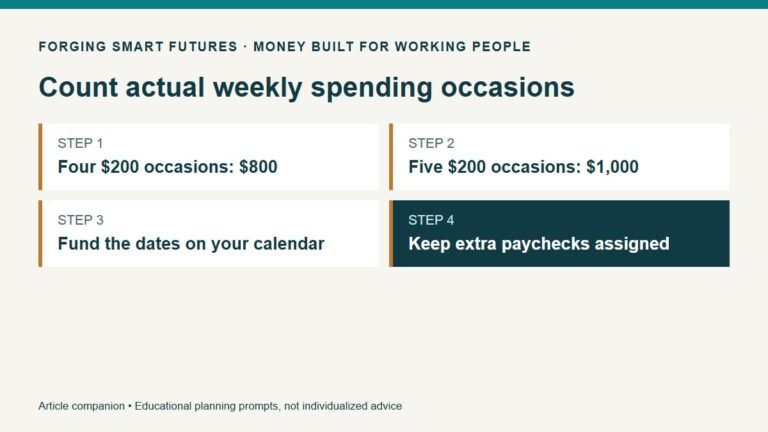
See why four weeks of grocery and fuel spending can underfund your year. Count actual dates and carry category balances between months.
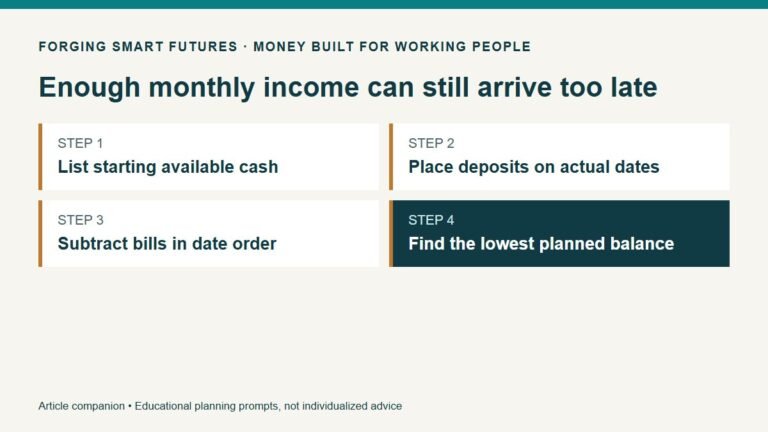
Put biweekly paychecks and monthly bills on one timeline. See why a positive monthly budget can still run short before payday, with a worked example.

Add up commuting, parking, extra care and meal costs without double counting. Compare work schedules using a practical example and a simple worksheet.
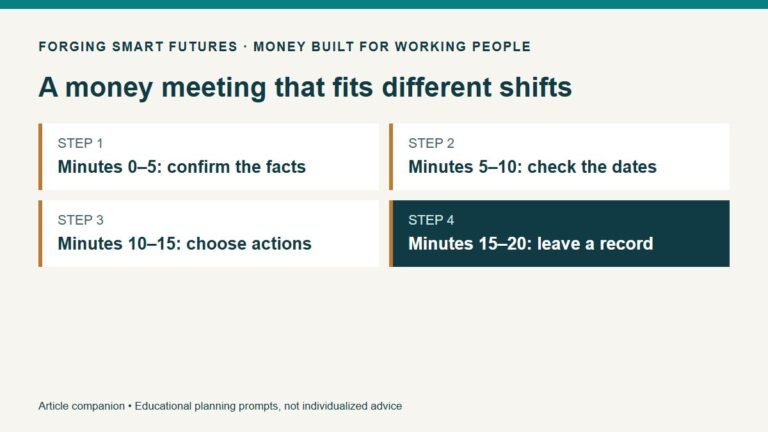
Use a short handoff to coordinate payday, bills and changing hours. Includes a practical agenda, a fictional example and a shared decision record.
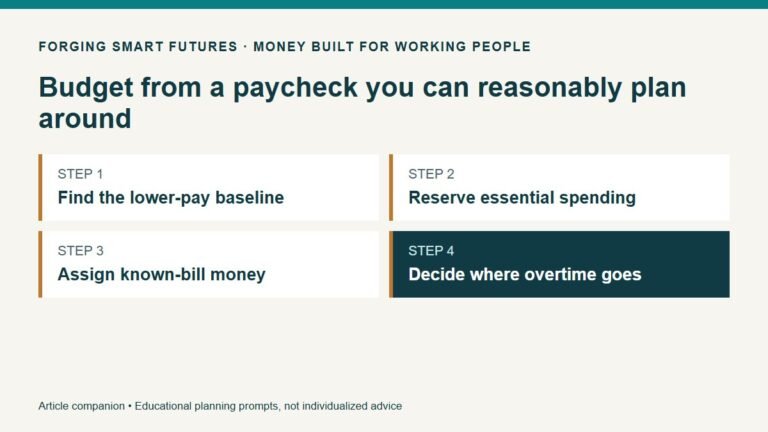
Build a baseline budget, give overtime a clear job, and check bill timing before spending the extra deposit. Includes a worked example and a free FSF calculator.
FSF uses necessary cookies for site functions such as sign-in and remembering your privacy choices. You can accept or reject optional cookies, or choose your preferences. You can change your choice later using Manage consent. See our Privacy Policy for details.