
Credit Freeze or Credit Monitoring: What Each One Actually Does
The short answer
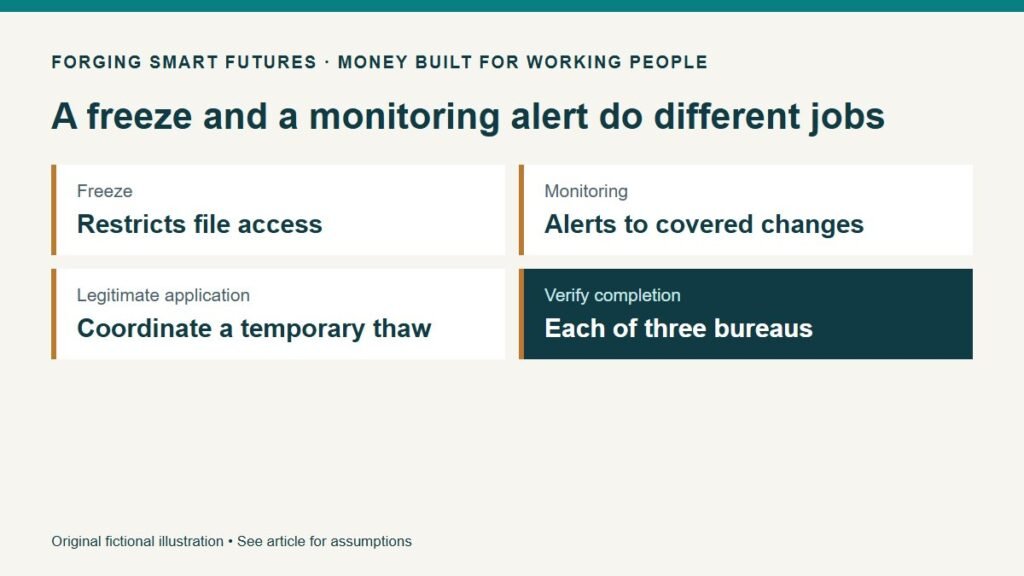
A credit freeze restricts access to your credit file, helping prevent new accounts opened through identity theft. Credit monitoring watches for certain changes and sends alerts. They serve different functions; paying for monitoring is not the same as placing a freeze.
The FTC explains that freezes are free and must be requested separately with each of the three nationwide credit bureaus. A fraud alert is another tool that asks businesses to verify identity; it does not restrict access in the same way. FTC freezes and fraud alerts.
Match the tool to the problem
If the concern is a thief opening new credit in your name, a freeze can add a barrier. If the concern is noticing changes to a report, monitoring may help you detect activity. Neither replaces reviewing statements, protecting account access or responding to identity theft.
A freeze does not close existing accounts or erase legitimate debt. Do not assume it blocks every kind of fraud, such as misuse of an existing payment card or a compromised email account. Keep those protections and response steps separate.
The FTC's credit guide discusses reviewing reports and monitoring them yourself or through a service. Check what any service actually observes and how quickly it alerts you. FTC understanding your credit.
Use a three-bureau completion record
Make a private checklist for Equifax, Experian and TransUnion. Record whether the freeze is active, the date verified and where you securely maintain access credentials. Do not put passwords or sensitive identity information in a shared budgeting worksheet.
Use independently verified official bureau channels. A message offering to “finish your freeze” for a fee should not be trusted solely because it arrived after a data-breach notice. Check the destination before supplying identity information.
Confirm completion rather than assuming a submitted request succeeded. The purpose of the checklist is to avoid protecting one file while forgetting the other two.
Plan for a legitimate credit application
Before applying for a work vehicle loan or other credit, ask the lender which bureau access it needs and when. Follow the bureau's process for temporarily lifting the freeze, then verify that protection resumes as intended.
In a fictional application plan, the lender expects to check a report on Tuesday and may need access again Thursday. A thaw covering only Tuesday could interrupt the process. That is a scheduling example, not a recommendation for a specific number of thawed days; coordinate the actual window with the lender and bureau.
Keep enough time for identity verification or a forgotten login. A freeze should not become a last-minute reason to accept a worse financing offer because the planned lender could not access the file.
Evaluate paid monitoring by the additional service
List which bureaus are monitored, what alerts cover, any identity-restoration assistance, limitations, price and renewal terms. If insurance is advertised, read what expenses or losses it covers and its exclusions. Do not equate an advertised coverage amount with a guarantee that every loss will be reimbursed.
A fictional $15 monthly service costs $180 over twelve months. Compare that with any free monitoring already available and the tasks you are willing to do yourself. The right question is what additional service is worth that cost to you, not whether a larger price promises a better credit score.
Respond to unfamiliar activity
Review the actual report or account using a verified channel. If identity theft is suspected, use the FTC's recovery process at IdentityTheft.gov. Keep evidence and follow the relevant dispute and reporting steps. An alert is the beginning of a review, not proof that the issue has already been fixed.
Avoid paying someone who guarantees to remove accurate information or instantly repair your credit. Protection, monitoring and correcting a report are separate tasks.
Your next action
Confirm your freeze status at each bureau and list any monitoring you already receive. Before financing equipment or a vehicle, use the FSF budgeting guide to assess affordability separately. Existing free and member checklists are labeled on the Resources page.
General education, not individualized credit, legal or financial advice. Prices and dates are fictional. No monitoring product, score improvement or affiliate relationship is endorsed.
Editorial attribution: Paul Foster
Published: September 10, 2026 Last reviewed: September 10, 2026
Sources & References
- https://consumer.ftc.gov/articles/credit-freezes-and-fraud-alerts
- https://consumer.ftc.gov/articles/understanding-your-credit
- https://www.identitytheft.gov/
Put this into practice
Put balances, dates and written terms in one usable plan. Free Debt & Credit checklist — no membership required.
Related decisions
- Check Your Credit Before You Need the Next Work Vehicle
- Secured Card or Credit-Builder Loan When Cash Is Tight?
- Medical Bill You Cannot Pay? Review It Before Choosing Financing
Expanded member resource: Debt Organization and Decision Workbook. Guided exercises with local save, reopen and print controls. Worksheet answers are not automatically calculated. Compare free resources and FSF membership benefits.
Human-reviewed, AI-assisted content; how FSF creates articles.